Types of Animals
Loading level…
Available on App Only
Download the Zape Learning App to access this content.


Grouping Animals
Because there are millions of different animals on Earth, scientists group them together based on things they have in common, like what their skin feels like or how they breathe. The biggest way we group them is by checking if they have a backbone (the long bone down your back).
1. Vertebrates (Animals with Backbones) Five main groups of animals have bones inside their bodies:
Mammals
- Skin: Hair or fur.
- Babies: Born alive and drink milk from their mothers.
- Examples: Humans, lions, whales, and dogs.
Birds
- Skin: Feathers.
- Babies: Hatch from hard-shelled eggs.
- Features: They have beaks and wings.
- Examples: Parrots, penguins, and eagles.
Reptiles
- Skin: Dry, tough scales.
- Babies: Usually hatch from leathery eggs.
- Temperature: Cold-blooded (they need the sun to get warm).
- Examples: Snakes, turtles, and crocodiles.
Amphibians
- Skin: Smooth, moist (wet) skin.
- Life: They start in water with gills and move to land with lungs.
- Examples: Frogs, toads, and salamanders.
Fish
- Skin: Scales and slime.
- Breath: They use gills to breathe underwater.
- Features: They have fins for swimming.
- Examples: Goldfish, sharks, and salmon.
2. Invertebrates (Animals without Backbones) Most of the animals on Earth actually belong to this group! Since they don't have bones, they are often soft or have a hard "shell" on the outside.
- Insects: They have 6 legs and 3 body parts (Ants, Bees, Butterflies).
- Arachnids: They have 8 legs (Spiders and Scorpions).
- Mollusks: Many have shells (Snails, Clams, Octopuses).
3. Grouping by What They Eat We can also sort animals by their "menu" choices:
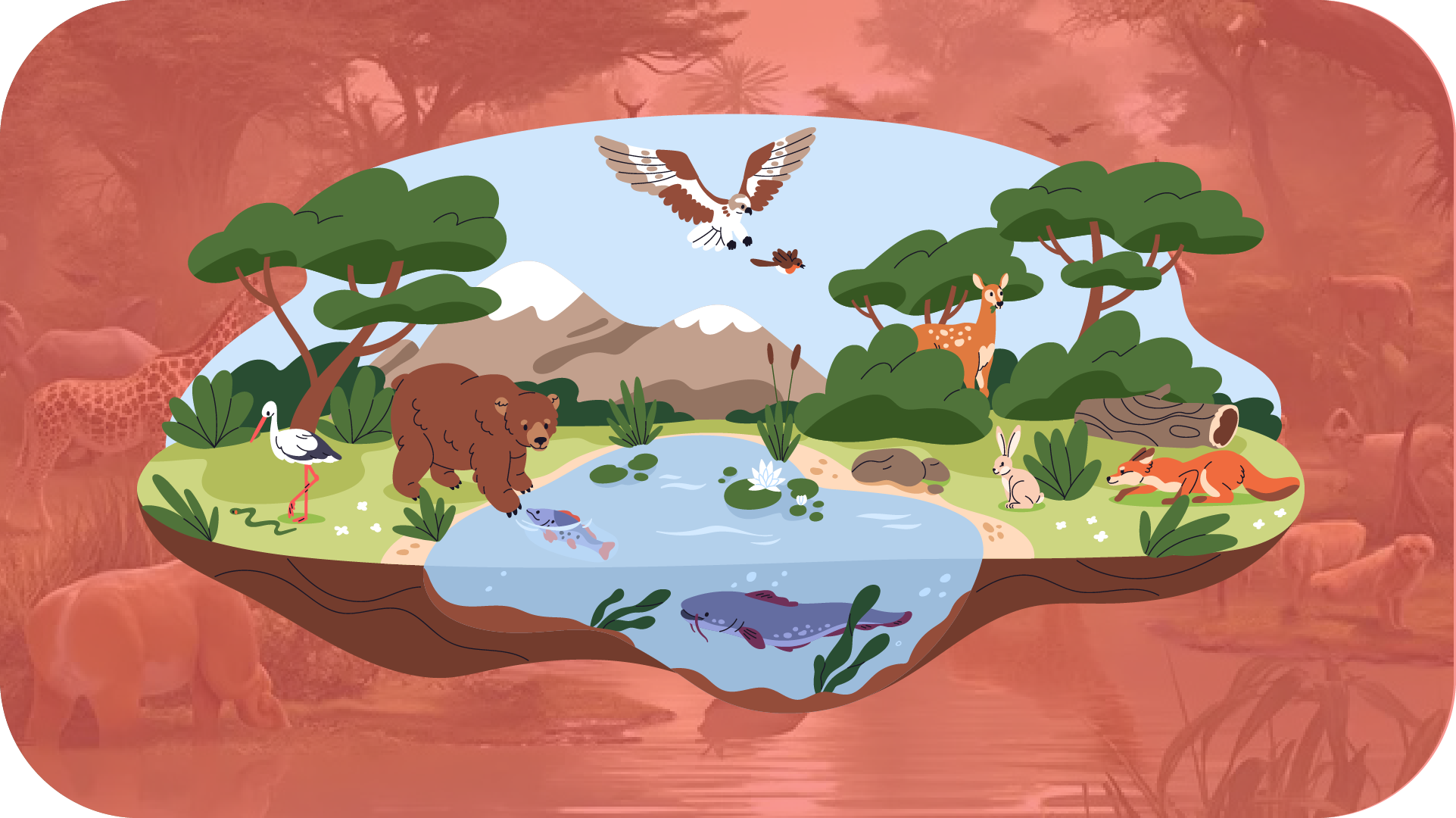
- Herbivores: Eat only plants (like a Rabbit).
- Carnivores: Eat only meat (like a Wolf).
- Omnivores: Eat both plants and meat (like a Bear).
Lesson Summary
- Vertebrates have a backbone; Invertebrates do not.
- The five vertebrate groups are Mammals, Birds, Reptiles, Amphibians, and Fish.
- We can also group animals by their diet (what they eat) or their habitat (where they live).